
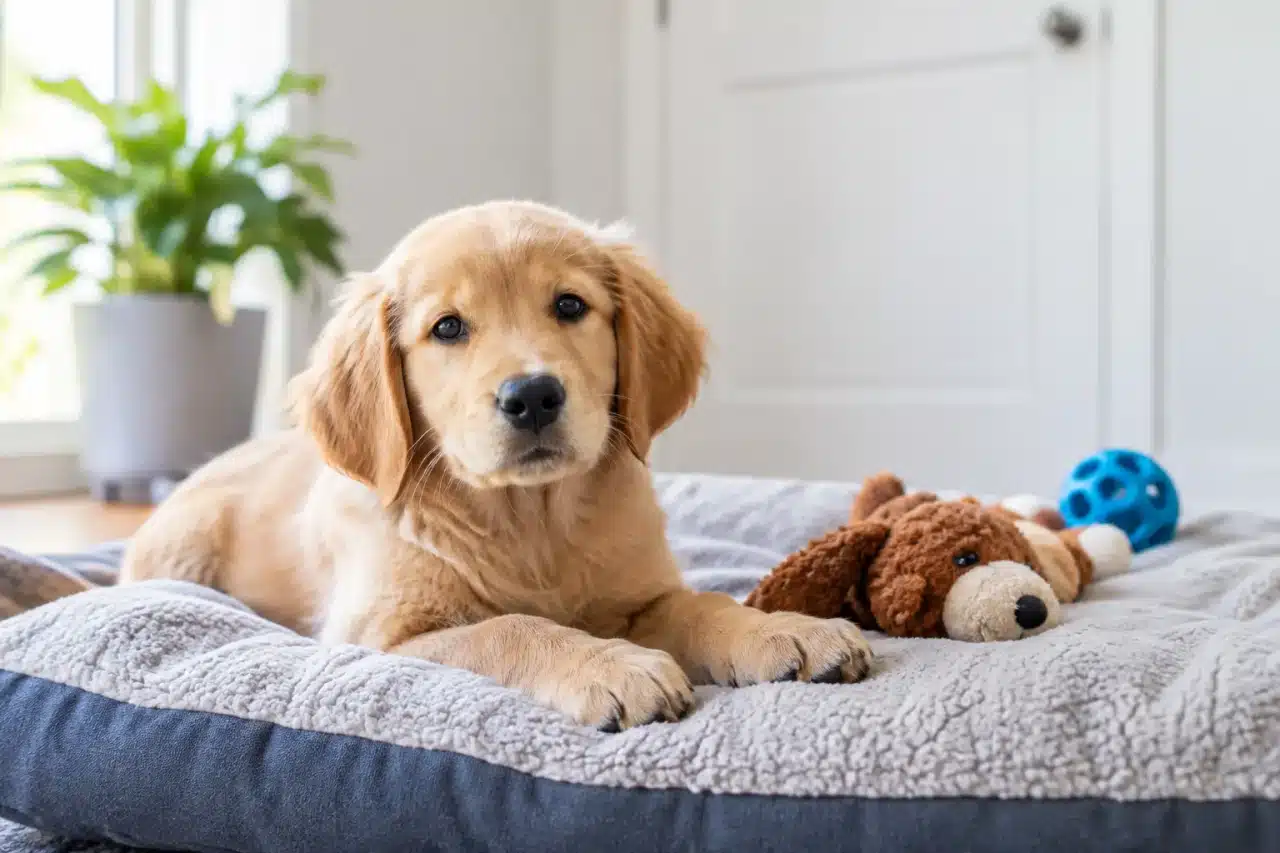
A puppy may look settled after a few minutes in a crate or puppy-proofed room, but that does not mean they are ready for a full workday alone. Young dogs are learning where to potty, what is safe to chew, how to calm themselves, and whether being separated from their people is temporary and safe. Those lessons take time, consistency, and a plan that fits the individual puppy.
Should puppies stay home alone?
Yes, puppies need short periods alone so they can build confidence and learn to rest without constant attention. But they should not be expected to handle long stretches alone before their bladder control, routine, and comfort with separation have developed. A gradual approach is kinder to the puppy and usually prevents stressful habits such as indoor accidents, destructive chewing, nonstop barking, or panic when a family member leaves.
For many Jacksonville households, the challenge is practical. Work meetings run long, commutes add time, school schedules change, and Florida heat can make a quick outdoor break more necessary. The goal is not to avoid leaving your puppy alone entirely. It is to make sure the time alone is appropriate for their age and supported by dependable care when your schedule requires more.
Start with age, not a one-size-fits-all clock
You may hear the rule that a puppy can hold their bladder for roughly one hour per month of age, up to a point. It can be a useful starting reference, but it is not a promise. Excitement, naps, recent water intake, meals, warm weather, digestive upset, and the puppy’s individual development all affect how long they can wait.
A very young puppy often needs a potty opportunity every one to two hours while awake. A three- or four-month-old puppy may manage a little longer, especially during a nap, but many still need a midday break. Even older puppies who can physically wait should not regularly spend an entire day without companionship, movement, water checks, and a chance to reset.
Breed and temperament matter, too. A small-breed puppy may need more frequent bathroom trips. A high-energy puppy may become restless much sooner than a laid-back pup. A recently adopted puppy may need a slower transition than one who has already become comfortable in the home. Your veterinarian can help when you have questions about house training, digestive concerns, or whether frequent accidents have a medical cause.
Build alone time in small, successful steps
The easiest way to teach independence is to practice it before you urgently need it. Start after your puppy has eaten, had a potty break, and had a little calm play or training. Leave them in a safe, comfortable area for a few minutes while you step into another room. Return quietly before they become distressed.
Over several days, gradually extend that time. Then practice stepping outside, getting the mail, or taking a brief walk around the block. Keep departures and returns low-key. A dramatic goodbye can make leaving feel like a major event, while a calm routine tells your puppy that people come and go and everything is still okay.
A camera can be helpful during this training. It lets you see whether your puppy settles down, chews an appropriate toy, and naps, or whether they are pacing, crying, scratching at a door, or trying to escape. A little protest can happen as puppies adjust. Persistent distress, heavy panting, drooling, frantic behavior, or attempts to injure themselves call for a more gradual plan and, when needed, guidance from a qualified trainer or veterinary professional.
Set up a safe home base
A crate can be a useful training tool when introduced positively, but it is not a place for a puppy to spend most of the day. If your puppy will be home longer than they can comfortably crate, a puppy-proofed pen or a gated area with more room may be a better option. The right setup depends on the puppy, the home, and how reliably they avoid chewing or getting into trouble.
Remove cords, shoes, cleaning products, medications, houseplants that may be toxic, small objects, and anything tempting within reach. Secure trash cans and close doors to rooms that have not been puppy-proofed. Provide fresh water and a safe chew or food puzzle that matches your puppy’s age and chewing ability. Do not leave an item that could splinter, break apart, or become a choking hazard simply because it is labeled as a dog toy.
Before leaving, make sure your puppy has had a potty break. In neighborhoods such as Nocatee or Ponte Vedra Beach, a shaded morning walk can be a comfortable time to let a puppy sniff, explore, and use up a little energy before the day begins. During Jacksonville’s hotter months, avoid assuming the backyard is automatically a safe midday option. Heat, humidity, hot surfaces, storms, and standing water all deserve consideration.
A midday visit changes the whole day
When work, appointments, or travel keep you away longer than your puppy can reasonably manage, a midday visit is not an indulgence. It is part of a responsible routine. A dependable caregiver can provide an outdoor potty break, fresh water, feeding if needed, short playtime, a gentle walk suited to the puppy’s vaccination status and energy level, and a quick check of their overall condition.
That visit also gives you useful information. Did your puppy eat normally? Did they potty? Are they showing signs of an upset stomach, low energy, or a new habit of chewing? Early observations matter with young dogs, particularly while they are still developing and adjusting to their household.
For owners who work from an office in downtown Jacksonville or have long days away from home, regular dog walking or in-home puppy visits create consistency. Puppies often do best when the visit happens around the same time each day. They learn that relief and attention are coming, which can make the rest of the day calmer.
Do not confuse a quiet puppy with a comfortable puppy
Some puppies sleep when left alone, and that can be perfectly normal. Others become quiet because they are worried or have shut down after initially protesting. Look at the full picture: their behavior before you leave, what a camera shows while you are gone, their mood when you return, and whether they are having accidents or destroying items.
Signs that the current schedule may be too demanding include repeated indoor accidents, crate soiling, excessive vocalizing, chewed doorframes or bedding, skipped meals, frantic greetings, and difficulty settling after you return. These are not signs that a puppy is being stubborn or trying to punish you. They are signals that the routine, environment, training pace, or time alone may need adjustment.
A change can be as simple as moving breakfast earlier, adding a morning walk, shortening a crate period, arranging a midday pet sitter, or asking a neighbor or family member to help on particularly long days. The best solution is the one your puppy can handle safely and consistently.
Plan ahead for changing schedules
Puppy routines can be disrupted by overtime, school breaks, business trips, holiday gatherings, and hurricane-season preparations. It helps to have a backup care plan before you need one. Share feeding instructions, veterinary information, medication details, emergency contacts, preferred potty locations, and any training cues your puppy is learning.
In-home care can be especially reassuring for puppies because they remain in their familiar surroundings. Their food, bed, smells, and daily rhythm stay the same, while a caregiver provides the practical attention they need. Lucky Dog Pet Care helps local households build care visits around real schedules, whether that means a regular midday puppy break or extra support while the family is away.
Your puppy will not stay small for long, but the habits formed now can shape years of confidence and good behavior. Give them manageable practice, a safe space, and help on the days your schedule asks more of them than they are ready to give.