

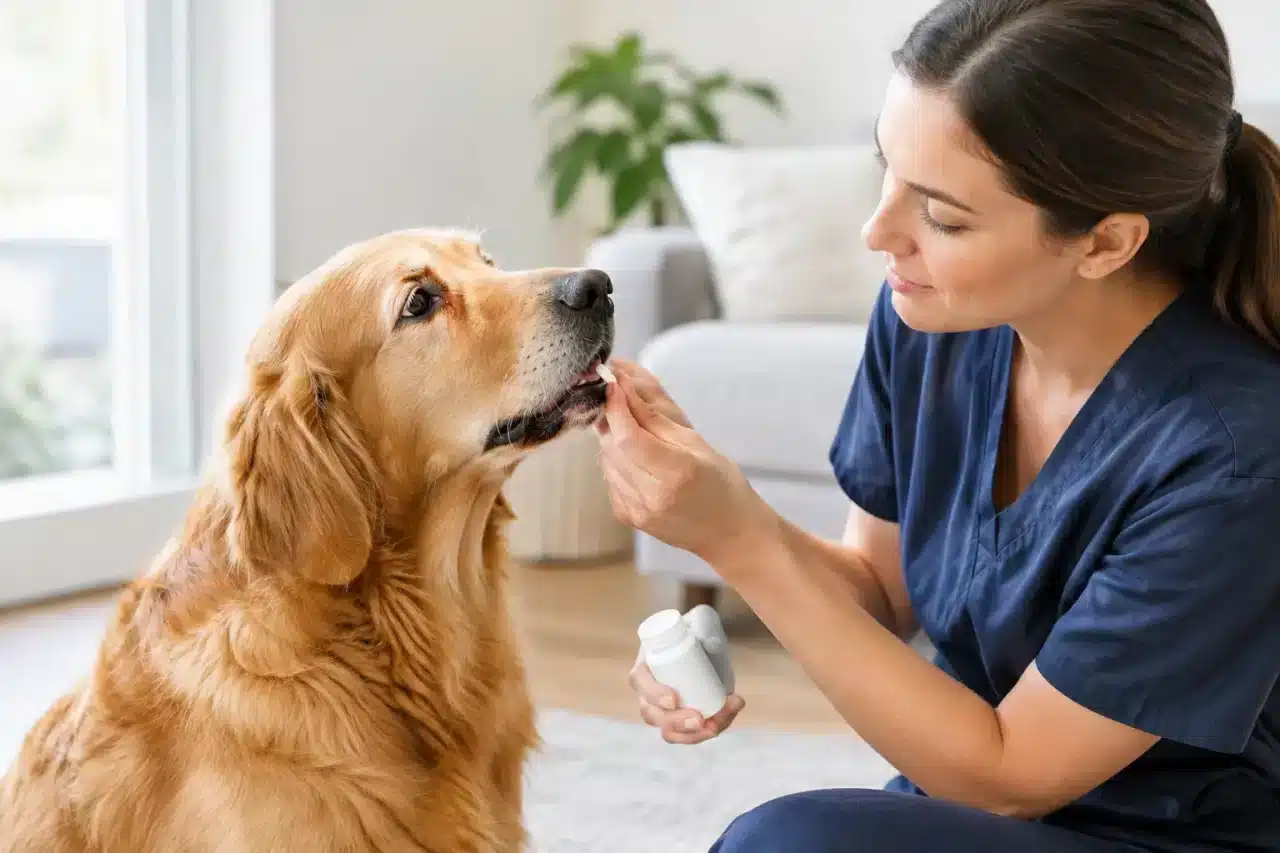
A pet’s medication schedule does not pause because you are stuck at work, headed out of Jacksonville for a few days, or managing a family trip. If your dog needs a pill with breakfast or your cat needs a liquid medication each evening, the question is practical and urgent: can pet sitters give medication?
Often, yes. A qualified pet sitter may be able to give routine medication when the pet, medication type, written instructions, and sitter’s training are a good match. But medication care is never something to assume. The safest arrangement begins with an honest conversation about your pet’s needs before the first visit is booked.
Can Pet Sitters Give Medication Safely?
Many in-home pet sitters can administer common medications, especially oral pills, capsules, chews, topical treatments, and liquid medicines given by mouth. Some caregivers may also be comfortable with eye or ear drops, topical creams, inhalers, or prescribed injections. Their ability to help depends on their experience, company policy, the pet’s temperament, and the level of medical care involved.
A pet sitter’s role is to follow the veterinarian’s and owner’s instructions carefully. They should not diagnose a problem, decide whether a dose should change, substitute medications, or make a judgment call about stopping treatment. Those decisions belong to the pet owner and veterinarian.
This distinction matters because even familiar medications can create unexpected issues. A dog that takes a pill easily for its family may refuse it from a new caregiver. A cat that normally accepts eye drops may become fearful when handled during a visit. A sitter who is transparent about what they can safely do is protecting your pet, not providing less care.
For Jacksonville households, in-home medication support can be especially helpful during long workdays, travel, or recovery after a routine procedure. Keeping a pet in a familiar home in Nocatee, Jacksonville Beach, or another nearby community may reduce stress compared with boarding, provided the care plan is appropriate for the pet’s condition.
Which Medications Are a Good Fit for Pet Sitting?
Routine, stable medications are usually the best fit. For example, a sitter may be able to give a prescribed tablet hidden in an approved treat, a measured liquid medication, or ear drops during a scheduled pet-sitting visit. The pet should already have an established prescription and a medication routine that the owner can clearly demonstrate.
Medication becomes more complex when timing is extremely precise, the pet is medically unstable, or administration requires advanced skill. A pet who has just come home from surgery, is vomiting, is having seizures, has uncontrolled diabetes, or needs close monitoring may need veterinary supervision, a veterinary technician, or a family member who can remain nearby. In some cases, a sitter can still provide companionship, potty breaks, food, water, and home checks while a veterinary professional manages the medical portion of care.
Injections deserve extra care. Some sitters are experienced and willing to administer prescribed insulin or other injections after receiving clear instructions and a demonstration. Others do not offer injectable medication services. Never wait until the day before departure to ask. Confirm the policy early, and have a backup plan in case your usual caregiver is unavailable or your pet will not cooperate.
Your Pet’s Comfort Is Part of the Decision
The right plan is not only about whether a medication can physically be given. It is also about whether it can be given without creating excessive fear or force. A pet sitter should not wrestle with a frightened dog or repeatedly chase a hiding cat to complete a dose.
If your pet becomes stressed, aggressive, or impossible to medicate safely, the sitter should contact you promptly and follow the emergency instructions you have provided. Sometimes the veterinarian can suggest a different formulation, such as a flavored liquid, transdermal medication, or a medication compounded into a more manageable form. A change like that must come from the prescribing veterinarian, not from improvising at home.
Prepare a Clear Medication Plan Before You Leave
A successful medication visit starts with preparation. During a meet-and-greet, show the caregiver exactly how you give each medication and let them see how your pet responds. If possible, have the sitter practice while you are home, especially if the routine involves a pill pocket, ear medication, or an injection they have agreed to provide.
Leave medications in their original labeled containers. The label should be readable and should match the instructions you provide. Avoid placing several loose pills in an unlabeled baggie or assuming that a sitter will remember a change you mentioned in passing.
For a care plan that is easy to follow, provide:
- The medication name, strength, exact dose, route, and scheduled time
- Clear instructions for giving it, including whether it must be given with food or a specific treat
- Your veterinarian’s name, phone number, and the closest preferred emergency clinic
- Written permission for emergency veterinary care, along with a spending limit and reliable contact numbers
It also helps to set out enough medication for the entire booking plus a little extra, if the prescription allows. Keep it separate from look-alike supplements and human medications. If refrigerated storage is required, clearly label the container and tell the sitter where it is kept.
For pets taking several medications, a simple chart can prevent confusion. List the date, medication, time due, and a space for the caregiver to record whether the dose was given. This record is useful for a weekend away, but it is particularly valuable for longer trips and senior pets with detailed routines.
Ask About Communication and Documentation
Dependable medication care includes communication, not just administration. Ask how the sitter will confirm that a medication was given and what happens if your pet refuses it. A quick visit update with a photo, written note, or time-stamped message can give owners needed peace of mind.
The caregiver should tell you if a dose is missed, spit out, vomited shortly after being given, or cannot be administered safely. Do not ask a sitter to double a later dose to make up for one that was missed unless your veterinarian has specifically instructed you to do so. The same goes for medication that appears to have been dropped or only partly swallowed.
A good care provider also watches for meaningful changes during routine visits: skipped meals, unusual lethargy, diarrhea, labored breathing, swelling, hiding, or changes in urination. These observations do not replace veterinary advice, but early notice can help an owner and veterinarian decide what needs to happen next.
When a Pet Sitter Should Call You or the Veterinarian
Your sitter should have clear guidance on what is urgent and what can wait for your response. For routine concerns, they may send an update and continue monitoring your pet. For more serious warning signs, prompt action is necessary.
Contact should be immediate if your pet has trouble breathing, collapses, has a seizure, appears severely painful, has repeated vomiting or diarrhea, cannot urinate, experiences facial swelling, or may have received the wrong medication or dose. A sitter should also call if a diabetic pet will not eat before a scheduled insulin dose, unless your veterinarian has already provided a specific plan for that situation.
Before travel, call your veterinary office to confirm its after-hours process and make sure your authorization paperwork is current. If your pet has a complex condition, ask the veterinarian directly whether in-home sitter medication visits are appropriate. That conversation can prevent a stressful decision later.
Choosing the Right Medication Support
When you speak with a pet-sitting provider, be specific from the start. Share the medication name, frequency, method, and your pet’s behavior around handling. The more detail you provide, the more accurately the caregiver can determine whether the assignment fits their service and skill level.
At Lucky Dog Pet Care, individualized routines are the foundation of in-home care. Medication requests should be discussed before service begins so the caregiver, pet owner, and veterinary instructions are all aligned. That planning also leaves room for the rest of the visit: fresh water, feeding, litter care, a calm walk or potty break, companionship, and a careful check of the home.
The best medication plan lets your pet remain safe, comfortable, and treated with patience while you are away. Start the conversation early, demonstrate the routine clearly, and choose a care arrangement that respects both your pet’s health needs and their limits.