
A dog who trembles when the suitcase comes out, hides from visitors, or stops eating when routines change is not being difficult. They are telling you that unfamiliar situations feel unsafe. The right pet sitter for anxious dogs can make time away from home far less stressful by protecting the routines, spaces, and gentle handling your dog already trusts.
For many Jacksonville pet owners, in-home care is a more comfortable choice than a busy boarding environment. It allows an anxious dog to sleep in their own bed, follow their usual feeding schedule, and take walks from the same front door they use every day. That familiarity does not remove anxiety entirely, but it can reduce the number of new things your dog has to process while you are away.
Why Anxious Dogs Need a Different Kind of Pet Sitting
An anxious dog may need more than food, a quick potty break, and a refill of fresh water. They often need predictable interactions. A sitter who arrives calmly, follows the same visit pattern, and gives the dog room to approach on their own terms can help prevent fear from escalating.
Anxiety can show up in many ways. Some dogs pace, bark, pant, cling to people, or have accidents indoors. Others become unusually quiet, refuse treats, hide under furniture, or seem reluctant to go outside. A good sitter does not assume every dog will greet them happily at the door. They watch for changes in behavior and adjust their approach without forcing contact.
This matters particularly during travel, when an owner’s absence can already disrupt a dog’s sense of security. A large group setting may work well for a social, adaptable dog, but it can overwhelm a dog who struggles with noise, strange people, or other animals. In-home pet sitting keeps the environment familiar while providing dependable care and observation.
What to Look for in a Pet Sitter for Anxious Dogs
The best fit is not necessarily the person who promises to make your dog instantly love them. Trust with an anxious dog is usually built through patience and consistency. Look for a sitter who asks detailed questions before the first visit and is comfortable following your dog’s established routine.
A calm, patient approach
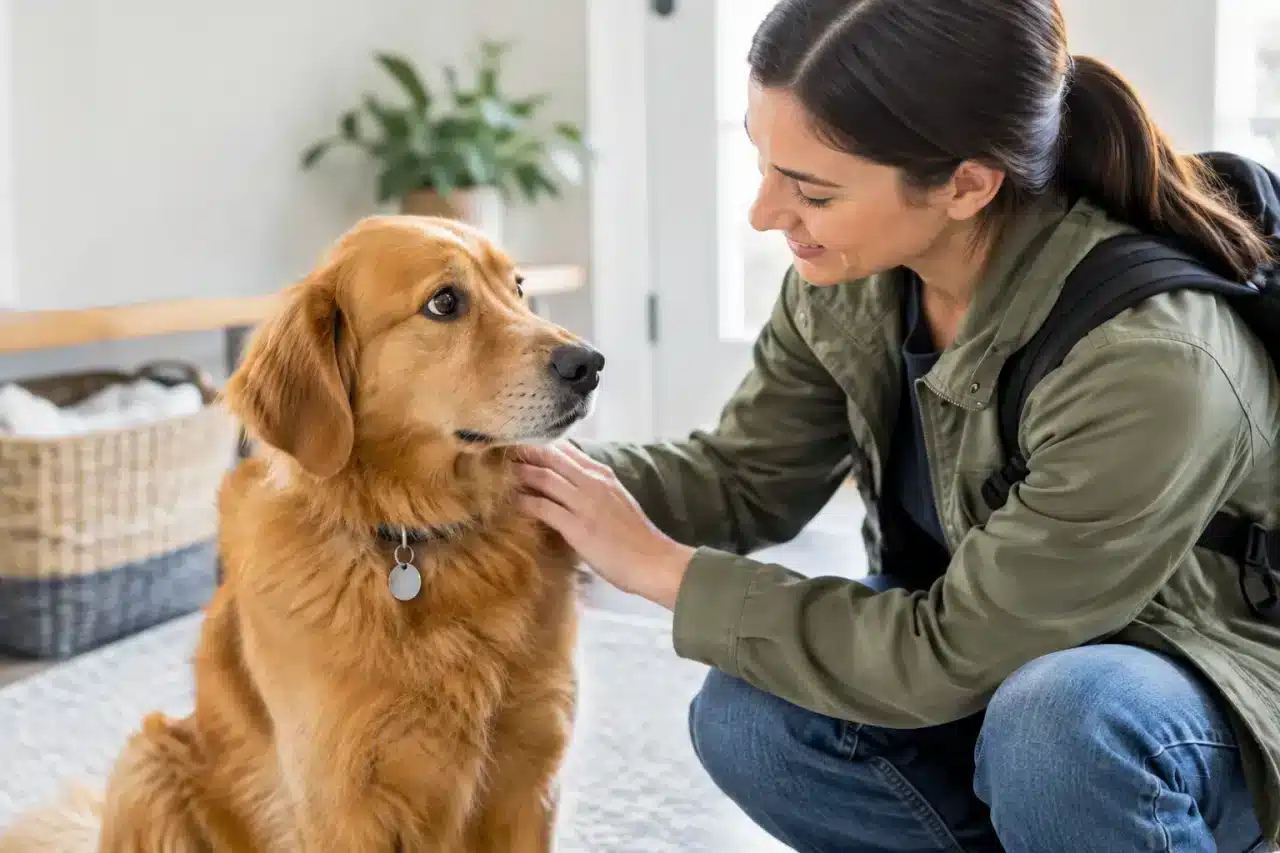
A capable sitter understands that eye contact, reaching over a dog’s head, moving quickly, or insisting on affection can be intimidating. They should be willing to enter quietly, avoid crowding the dog, and let the dog decide when to come closer.
For some pets, the first few visits are mostly about calm presence, a familiar voice, and a predictable meal or walk routine. That is still progress. The goal is not a performance. The goal is for your dog to feel safe enough to eat, rest, go outside, and settle while you are away.
Respect for routines and household details
Anxious dogs often rely on patterns. Feeding at a familiar time, using the same leash, taking the same neighborhood route, and having a quiet wind-down period can all make a difference. Your sitter should want to know the details: where your dog prefers to rest, whether they react to delivery trucks, how they behave around other dogs, and what words or cues help them feel comfortable.
This is especially useful for households in busy areas such as Jacksonville Beach, where foot traffic, bicycles, golf carts, and unfamiliar sounds can make an already nervous dog more alert. A sitter should know whether a quieter walk time or a shorter, lower-stimulation route is the better choice.
Clear communication and observation
You should not have to wonder how your dog is doing. Reliable updates can include whether your dog ate, drank water, went outside, took medication, and appeared relaxed or unsettled. Photos can be reassuring, but practical notes matter just as much.
A thoughtful sitter also knows when to contact you. A skipped meal may be normal for one dog on the first day of a trip, while it may be a concern for another. The right care plan identifies what is typical for your pet and what changes require a call, a veterinarian consultation, or an adjustment to the visit schedule.
Safe handling without pressure
An anxious dog may be more likely to slip a collar, bolt through a door, or panic during a walk. Discuss leash habits, door routines, escape risks, and triggers before service begins. If your dog is fearful around strangers, dogs, thunder, or traffic, that information should shape the care plan.
A sitter should never punish fear-based behavior. Growling, retreating, or refusing to move can be a dog’s way of asking for space. Safe care means using patience, distance, and familiar routines rather than trying to overpower the situation.
Set Up the First Visits Before Your Trip
A meet-and-greet is particularly valuable for anxious dogs. It gives your dog a chance to see the sitter while you are home and relaxed. It also lets the sitter learn the layout of the home, locate food and supplies, practice the entry routine, and hear directly from you about your dog’s behavior.
One introduction is enough for some dogs. Others benefit from a short trial visit or dog walk before a longer trip. A few successful visits can help your dog learn that this person arrives, provides care, and leaves without anything frightening happening.
During the introduction, avoid pressuring your dog to greet the sitter. Let them stay behind you, in their bed, or at a comfortable distance. If they are willing to take a treat, that is helpful, but treats should not be used to lure a fearful dog into unwanted contact. The sitter can gently toss one nearby and allow the dog to choose.
Write down your dog’s daily routine in plain language. Include meal portions, medications, walk preferences, potty habits, sleeping arrangements, commands, and known triggers. Share your veterinarian’s contact information, emergency contacts, and instructions for severe weather. In Northeast Florida, a summer storm can arrive quickly, and thunder-sensitive dogs may need extra indoor companionship and a carefully timed potty break.
Build a Care Plan Around Your Dog, Not a Standard Schedule
Visit frequency depends on the dog’s age, health, bladder needs, and anxiety level. A confident adult dog may do well with a few well-timed visits each day. A senior dog, puppy, dog with separation anxiety, or pet recovering from illness may need more frequent check-ins or overnight care.
More visits are not always the only answer. For a dog who takes a long time to settle after each arrival, fewer but longer visits may be less disruptive. For a dog who becomes distressed alone, several shorter check-ins or an overnight stay may provide better reassurance. The right plan depends on how your dog responds, not on a one-size-fits-all package.
It also helps to keep the home environment quiet and familiar. Leave your dog’s bed, toys, and normal feeding bowls in place. Avoid introducing a new food right before travel. If your dog is comforted by a particular radio station, white noise, crate, or nighttime routine, include those details in the sitter’s instructions.
A dependable local provider can also support the household beyond the pet. Bringing in mail, checking doors and lights, taking out trash, and watching for unexpected issues can help traveling owners feel more settled. For pet owners in Ponte Vedra Beach who may be away for extended work travel or a family vacation, those practical home checks can be as reassuring as the pet updates.
Questions Worth Asking Before You Book
Ask how the sitter handles a dog who will not come out of a crate, refuses a walk, or appears fearful at the door. Their answer should reflect patience and safety, not a promise to push through the dog’s discomfort. Ask how they document meals, medications, and behavior changes, and how they communicate if something does not seem right.
You should also discuss backup planning. Illness, traffic, weather, and unexpected household issues happen. Knowing how your provider handles scheduling changes and urgent concerns gives you a clearer picture of their reliability.
At Lucky Dog Pet Care, individualized in-home plans can include walks, feeding, fresh water, companionship, medication support, and home checks based on the pet and household. The most useful care plan is specific enough that your dog’s routine feels recognizable, even when you are not there.
Your dog does not need to become outgoing to be well cared for. They need a calm person who pays attention, respects their boundaries, and shows up when expected. With the right preparation and a sitter who understands anxious behavior, your time away can feel safer for both of you.