A dog run can look tidy from the patio and still hold bacteria, urine residue, parasites, and odors that make outdoor time less comfortable. Knowing how often to clean dog runs helps protect your dog’s paws, skin, stomach, and breathing comfort while keeping your yard more pleasant for the whole household.
For most homes, waste should be removed daily, problem areas should be rinsed or spot-cleaned as needed, and the full run should be washed on a regular schedule. The right routine depends on the number of dogs using the space, the surface underfoot, Jacksonville’s heat and rain, and whether a dog has any health concerns.
How Often to Clean Dog Runs at Home
There is no single schedule that works for every property, but daily waste removal is the baseline. Leaving stool in a run for several days allows odor to build, gives flies more opportunity to gather, and increases the chance that parasites or bacteria can spread through paws, toys, and shared outdoor areas.
For one healthy dog using a reasonably sized run, pick up solid waste at least once each day. Twice daily is better during hot, wet weather or when the run is close to a patio, pool area, neighbor’s fence, or outdoor living space. In Northeast Florida, a quick morning and evening check can prevent rain from breaking down waste and washing residue into drainage areas.
A complete wash is usually needed every one to two weeks for a private run used by one or two healthy dogs. That means removing waste, clearing loose debris, rinsing surfaces, applying a pet-safe cleaner where appropriate, and allowing the area to dry as fully as possible. A run may need a more frequent wash – sometimes every few days – when several dogs use it, a dog has diarrhea, or urine odor lingers after routine rinsing.
Daily Cleanup Keeps Small Problems Small
Daily cleanup is less about making the space look perfect and more about keeping contamination from accumulating. Fresh water bowls should be emptied, rinsed, and refilled each day. Pick up stool, inspect for standing water, and remove chewed toys, food scraps, leaves, and other debris that can trap moisture.
Pay attention to the corners of the run and the area near gates. Dogs often choose the same places to urinate, and those repeat spots can develop strong odor and discoloration. A targeted rinse with water can help between deeper cleanings, especially on sealed concrete or pavers. Avoid simply spraying the whole area every day if water has nowhere to drain. Constant moisture can create its own odor and encourage algae or mildew.
If your dog spends only a short time in the run between walks, daily pickup and a quick inspection may be enough. If the run is the main daytime potty space while you are at work, it deserves closer attention. A dependable midday dog walk can also reduce how heavily the run is used and give your dog a welcome break from the same small outdoor area.
When to Clean Immediately
Some messes should not wait for the normal cleaning day. Diarrhea, vomiting, visible parasites, blood in stool, spilled food, and dead wildlife or animal remains all call for prompt cleanup. Keep your dog away from the area until it has been cleaned and dried.
A dog with a contagious illness, such as giardia or kennel cough concerns, may require a veterinarian-recommended sanitation plan. Standard rinsing is not always enough in those situations. Ask your veterinarian which disinfectants are safe for the condition involved and how long treated surfaces must stay clear before your dog returns.
Match the Cleaning Method to the Run Surface
The best cleaning frequency is only useful if the method suits the surface. Concrete, turf, gravel, dirt, and grass all handle waste and moisture differently.
Concrete and sealed pavers are relatively easy to scoop, rinse, and sanitize. They can also hold urine odor when they are porous, cracked, or poorly drained. A pet-safe enzymatic cleaner can break down organic residue better than fragrance-heavy products that merely cover the smell. Rinse thoroughly after using any cleaner and wait until the surface is dry before letting your dog back out.
Artificial turf often needs more than a hose-down. Solid waste should be picked up daily, urine areas should be rinsed regularly, and the fibers should be brushed or fluffed as needed. If the turf has inadequate drainage or an infill that traps odor, cleaning more often will help only up to a point. Persistent smell may signal that the base or drainage system needs professional attention.
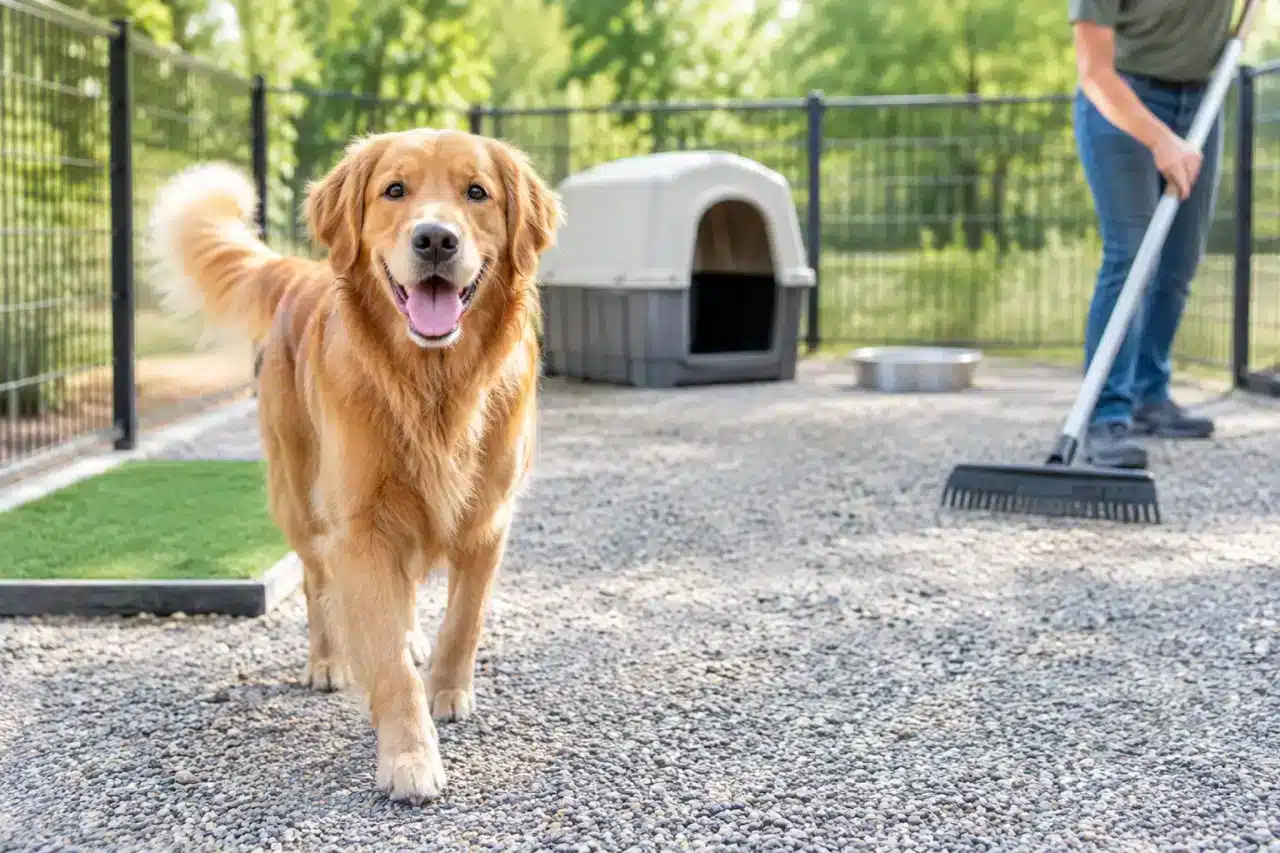
Gravel and pea stone make pickup harder because small waste pieces can settle below the surface. Rake out debris, remove soiled material when necessary, and replace sections of gravel that stay wet or smell strongly. Dirt runs can become muddy and contaminated quickly after rain, particularly in humid Jacksonville summers. Consider improving drainage, adding a suitable ground cover, or rotating your dog’s access to give worn areas time to dry.
Natural grass is comfortable for many dogs, but it can hide waste and develop bare, urine-burned spots. Pick up waste promptly and avoid overusing harsh products that could harm grass or leave irritating residue on paws. When grass is thin, muddy, or repeatedly soaked, a more frequent cleanup routine and better drainage can make a meaningful difference.
A Practical Weekly and Monthly Routine
A weekly cleaning is a good time to go beyond picking up waste. Move bowls, toys, and raised beds. Check fencing and gate latches. Look for ants, fleas, standing water, damaged turf, and sharp objects that may have entered the run. Rinse hard surfaces and treat known urine areas with a pet-safe cleaner when needed.
Once a month, take a closer look at the run as part of normal property care. Wash bedding and outdoor mats, inspect drainage, clean water bowls more thoroughly, and assess whether the layout still works for your dog. A run that is too small, shaded all day, or slow to drain will be harder to keep fresh no matter how often it is cleaned.
This monthly check is especially useful for homeowners in communities such as Nocatee and Ponte Vedra Beach, where outdoor living areas may sit close to neighboring properties or landscaped common spaces. Good sanitation protects your own yard while helping prevent odors and runoff from becoming a concern for others.
Choose Pet-Safe Products and Use Them Carefully
Strong-smelling cleaners are not automatically better cleaners. Bleach, ammonia, and heavily fragranced products can irritate a dog’s nose, paws, skin, or lungs when used incorrectly. They can also create dangerous fumes if products are mixed. Never combine cleaning chemicals, and do not allow a dog into a treated run until every product has been used according to its label directions and the area is dry.
For regular organic odors, pet-safe enzyme cleaners are often a practical choice because they are designed to break down the source of urine and waste odors. Use only as directed, and remember that no product can overcome poor drainage or waste that has been left in place too long.
Clean water, a sturdy scoop, disposable bags or a covered waste container, a dedicated scrub brush, and pet-safe cleaner are usually enough for a well-managed home run. Keep these supplies away from pet food and out of reach of children and animals.
Signs Your Dog Run Needs More Attention
Your nose is useful, but it should not be the only measure. A persistent odor, swarms of flies, slick green growth, muddy areas, stained concrete, or repeated paw licking all suggest that the run needs a closer look. Watch for changes in your dog as well. Reluctance to enter the run, coughing around strong odors, frequent stomach upset, or irritated paws may have many causes, but the outdoor environment is worth checking.
Dogs who are older, recovering from surgery, prone to allergies, or not fully vaccinated may need a cleaner, drier outdoor space than a healthy adult dog. Puppies also need more frequent attention because they have accidents often and are more likely to investigate or taste things they should not.
For households with packed workdays, travel plans, or multiple pets, regular waste management can be one less task to carry. Lucky Dog Pet Care provides practical pet and property support that helps Jacksonville households keep dogs comfortable, routines consistent, and outdoor areas cared for.
A clean dog run should feel like a safe extension of home: dry enough to use, free of lingering waste, supplied with fresh water, and ready for your dog’s next stretch of sunshine or fresh air.