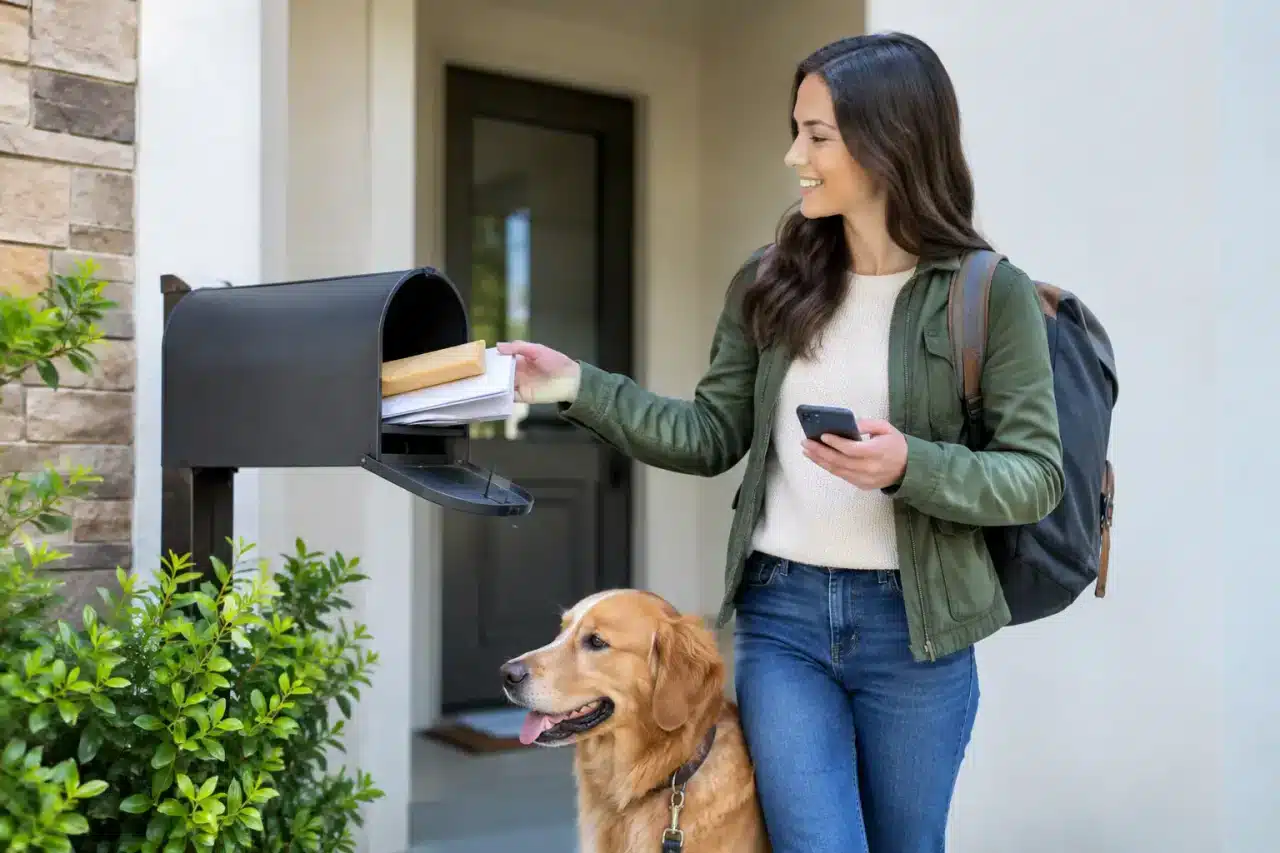
A full mailbox can tell the neighborhood that no one is home. For pet owners, mail pickup while traveling belongs on the same departure checklist as feeding instructions, medications, keys, and emergency contacts. It is a small detail that helps your Jacksonville home look cared for while your dog, cat, or other pets stay comfortable in their familiar surroundings.
When you arrange it early, mail collection is straightforward. When it is left to the day before a flight, it can create unnecessary questions about access, timing, package deliveries, and who is responsible if something important arrives. A clear plan protects your privacy, keeps entrances tidy, and gives your pet care provider one more way to notice changes at the home.
Why Mail Pickup Matters When You Are Away
Mail and packages do more than fill a box. An overflowing mailbox, newspapers on the driveway, or packages sitting at the front door can make a vacant home more noticeable. In Florida, rain and afternoon storms can also damage envelopes, boxes, and time-sensitive documents before you return.
For households with pets, a regular home visit already involves practical observation. A caregiver coming in for meals, fresh water, litter care, outdoor time, and companionship can also notice a package blocking the entry, a delivery that needs to be moved under cover, or mail that has accumulated faster than expected. That kind of routine attention is especially helpful during a longer trip or an extended absence from a Ponte Vedra Beach or Jacksonville Beach home.
There is also the simple comfort of returning to an orderly house. After a long drive or delayed flight, most people would rather greet their pets and settle in than sort through a wet stack of mail on the porch.
Choose the Right Mail Pickup While Traveling Option
The best approach depends on how long you will be gone, the type of mail you expect, and whether someone will already be visiting your home. A short weekend away may only require a trusted person to bring in a package. A two-week family vacation calls for a more deliberate plan.
Place a temporary mail hold for longer trips
A postal hold can be a sensible option when no one needs access to your mail during your absence. Set it up far enough ahead of departure that you can confirm the requested dates and decide whether you want delivery to resume or prefer to pick up accumulated mail when you return.
This is often the simplest choice for travelers who do not expect checks, legal papers, medication deliveries, or other items that need prompt attention. Keep in mind that a mail hold does not necessarily solve every package situation. Different carriers have their own delivery procedures, and oversized packages may still require instructions.
Ask a trusted local person to collect it
If you are expecting important correspondence or want the home to look actively occupied, arrange for a trusted neighbor, family member, or authorized pet and home care provider to collect mail during scheduled visits. Give clear directions about where to place it indoors, whether packages should be moved out of sight, and how often you would like updates.
Do not assume that anyone entering your home is automatically permitted to collect mail from a locked mailbox or sign for deliveries. Confirm what access they have and what authorization may be needed. If the arrangement involves a gated community, condo building, or HOA in Nocatee, make sure visitor access and delivery procedures are handled before you leave.
Use delivery instructions for expected packages
When a package is already on the way, check the carrier’s options before departure. You may be able to reschedule delivery, redirect the package to a pickup location, or request a safer drop-off location. Avoid leaving sensitive items in plain view or asking a caregiver to accept a delivery that requires identification or a signature unless you have confirmed the process in advance.
For valuable, perishable, or temperature-sensitive deliveries, the safest choice is usually to schedule them for after your return. A pet sitter can help with ordinary home checks, but they should not be asked to take on unclear delivery obligations or store items that could spoil.
Add Mail Collection to Your Pet Care Instructions
Good care instructions are specific without being complicated. Along with feeding amounts, medication schedules, preferred walking routes, and veterinarian information, include a brief mail and package plan. A reliable provider should know what is routine, what needs immediate attention, and what can wait until you are home.
State the location of the mailbox, whether there is a key, which days mail is normally collected, and where it should be placed. If you receive magazines or newspapers, mention those as well. A pile of flyers can be just as visible as a full mailbox.
It also helps to define what counts as urgent. For example, an envelope from a medical provider or a package marked as refrigerated may warrant a prompt message. Catalogs and routine circulars generally do not. This keeps communication useful rather than creating alerts for every piece of paper.
At Lucky Dog Pet Care, home-support details are handled as part of a practical, individualized care plan. During in-home pet sitting visits, the priority remains your pets’ routine and well-being, but basic home observations can provide welcome reassurance while you are away.
Make the Home Look Lived In Without Taking Risks
Mail pickup works best with a few modest home-care habits. You do not need to turn your house into a complicated security project. The goal is to reduce obvious signs of absence while keeping access simple and safe for the person caring for your pets.
Before leaving, bring in outdoor cushions, secure trash bins, and clear the front entry. Set a few interior lights on timers if that fits your household. Avoid posting travel dates publicly, and do not leave spare keys in predictable locations. Give your pet care provider the entry method they need, along with a backup plan in case of a lock, gate, or power issue.
If you have a doorbell camera or exterior cameras, tell your caregiver where they are located and how you prefer to use them. Cameras can be reassuring, but they should support a relationship built on clear expectations and trust, not replace communication. A quick check-in after a visit is often more helpful than trying to interpret every motion alert from another time zone.
Plan for the Unexpected Package
Even careful travelers receive deliveries they did not anticipate. A relative may send a gift, an automatic order may ship early, or a business document may arrive at the wrong time. Decide in advance how you want your caregiver to handle an unexpected box.
For most households, the instructions can be simple: move packages out of public view if it is safe to do so, bring them inside if access and space allow, and send a brief update. If a package is damaged, leaking, marked with a warning label, or looks suspicious, the caregiver should not handle it beyond what is safe. Your instructions should prioritize people, pets, and property over saving a delivery.
Also consider your pet’s response to delivery activity. Some dogs become anxious or highly reactive when trucks stop outside or packages appear at the door. A consistent sitter can use the same calm arrival routine, provide a potty break or walk, and help your dog return to a familiar rhythm. That is one of the advantages of in-home care over adding a boarding transition during an already busy travel week.
Before You Leave, Confirm the Details
The day before departure, review your plan rather than assuming everyone remembers it. Confirm your travel dates, visit schedule, emergency contact, and the last day mail should be collected. If you have placed a hold, verify the start and end dates. If someone is picking up mail, make sure they have the required key, gate code, or building access.
Then put the details in one place. A written household guide is useful for every trip, especially when pets have medications, senior-care needs, or particular routines. It should be easy for your caregiver to find without searching through several text messages.
A cared-for home gives you room to focus on the reason for your trip, while your pets keep the routines that help them feel safe. When you return, a clear porch, an empty mailbox, and a happy greeting at the door can make home feel exactly as it should.